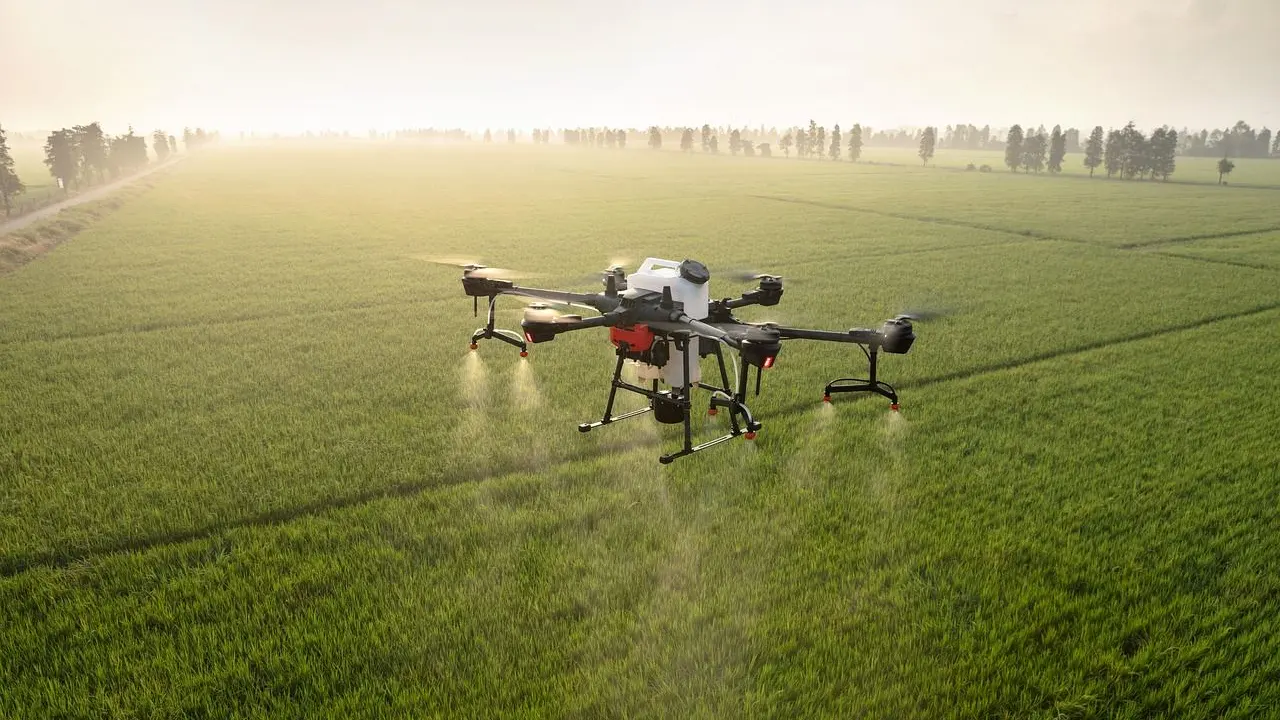
Wondering about agricultural drones uses for your own fields? In Thailand the main job is spraying pesticide and fertiliser, mostly over rice and sugarcane, which can cut labour and chemical use.
This page belongs to the wider topic of agriculture in thailand.
| Item | Value |
|---|---|
| Registered agriculture drones in Thailand (2023) | More than 10,000 |
| Arable cropland managed with drones (2023) | 30% (4 million ha) |
| Rice and sugarcane cropland, the two main drone crops | 10.6 million ha and 2.6 million ha |
| Drone spraying cost versus manual labour | 60–100 THB per rai versus 150–300 THB per rai |
| Pesticide use with drone spraying | 40% reduction |
The figures come from a 2023 APEC presentation and a Winrock International project summary. They can change, so check the source before you rely on them.
What farm drones mainly do in Thailand
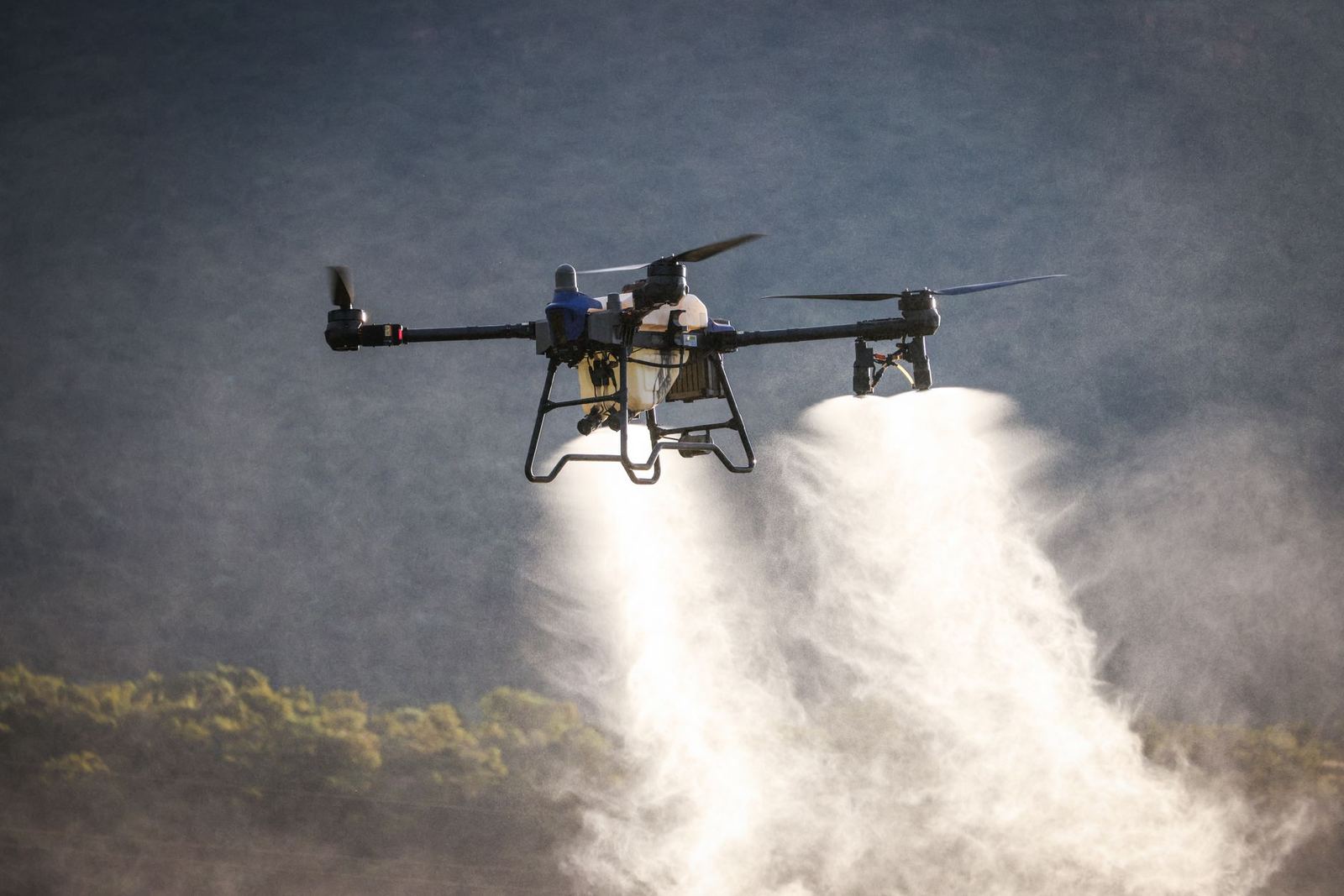
Spraying is the main job. A 2023 APEC presentation by a Kasetsart University researcher says agricultural drones were first introduced in Thailand in early 2009, mainly for crop management. It describes the registered fleet as mostly spraying drones for fertilisers and pesticides.
In practice, the uses named in the sources fall into a short list:
- Spraying pesticides on crops.
- Spreading fertiliser.
- Applying water and other agricultural substances.
- Crop monitoring, which the APEC presentation lists alongside spraying.
Winrock International says these drones can carry chemical payloads and be programmed to follow precise flight paths, so chemicals reach the targeted areas. AgriBusiness Global adds that spraying drones can be used in impassable terrain.
Why ageing farmers and labour costs push adoption
Thailand’s farm workforce is getting older. The Bangkok Post reported on 20 December 2024 that the Department of Agriculture is promoting drone technology to help the nation’s ageing farmers.
Winrock International links the same labour shortage to higher costs for manual spraying and crop management. It also notes that direct exposure to chemicals poses health risks, which drones reduce by cutting human contact with hazardous substances.
The cost gap is the other draw. Winrock’s own comparison puts drone spraying at roughly 60 to 100 baht per rai against 150 to 300 baht per rai for manual labour, and says drones can cut costs by about 50%, mainly in larger fields. It also cites a 40% reduction in pesticide use, though these are project figures rather than independent field trials. Read the Winrock summary for the full comparison.
Which crops use drones most?
Rice and sugarcane lead.
The presenter also calls drones a key enabler of smart climate agriculture, with less over-fertilising and more precise monitoring. The wider field of precision agriculture technology puts these tools in context.
What the rules say about flying them
Rules have shifted quickly. As of The Thaiger’s report of 10 August 2025, the Civil Aviation Authority of Thailand (CAAT) was permitting agricultural drone operations from August 11 under strict conditions, while other drones stayed banned nationwide until August 15 or further notice. The Thaiger tied this to the Thailand-Cambodia border situation.
The conditions reported were:
- Both the drone and its operator registered with the CAAT, plus agricultural flight authorisation.
- Flight notifications submitted at least 12 hours in advance.
- Flights only between 6am and 6pm, below 30 metres.
- Use limited to spraying or distributing agricultural substances, water or fertiliser, not photography or surveying.
- No flights within a 9 kilometre radius of airports and aircraft landing sites.
That wording means monitoring and survey flights fell outside the permitted scope in that announcement. Check the CAAT before any flight, because this report is a snapshot.
Practical limits to check before relying on drones
Drones are not a drop-in replacement for every task. The sources point to several limits:
- Pesticide compatibility: not all products can be sprayed by drone, and some clog nozzles because of poor solubility in water.
- Product approval: AgriBusiness Global reports more than 390 pesticide products registered for spraying drones in Japan, around 203 in South Korea and more than 470 in India, while many Southeast Asian countries lack such lists.
- Batteries: the APEC presentation describes them as highly taxed imports with disposal concerns.
- Skills and access: Winrock says a shortage of skilled operators is being addressed through a certification programme with the Department of Agriculture and academic institutions.
Winrock also says leasing and rental models have become a practical way to use drones without the high upfront purchase cost. Because most of the work described above involves agricultural chemicals, growers weighing a different route can read about organic farming in thailand.
Frequently asked questions
What are agricultural drones mostly used for?
Show answer
In Thailand they are mostly used to spray fertilisers and pesticides, according to a 2023 APEC presentation. Crop monitoring is also listed as a use.
How much cheaper is drone spraying than manual spraying?
Show answer
Winrock International’s comparison gives 60 to 100 baht per rai for drones and 150 to 300 baht per rai for manual labour. It says savings of about 50% are mainly in larger fields.
Can farm drones be used for photos or surveys?
Show answer
As of The Thaiger’s 10 August 2025 report, the CAAT’s agricultural permission covered spraying or distributing substances, water or fertiliser, not photography or surveying. Rules may have changed since, so check the CAAT.
Do you have to buy a drone to use one?
Show answer
No. Winrock International says leasing and rental models let farmers access drone technology without the high upfront cost of buying.