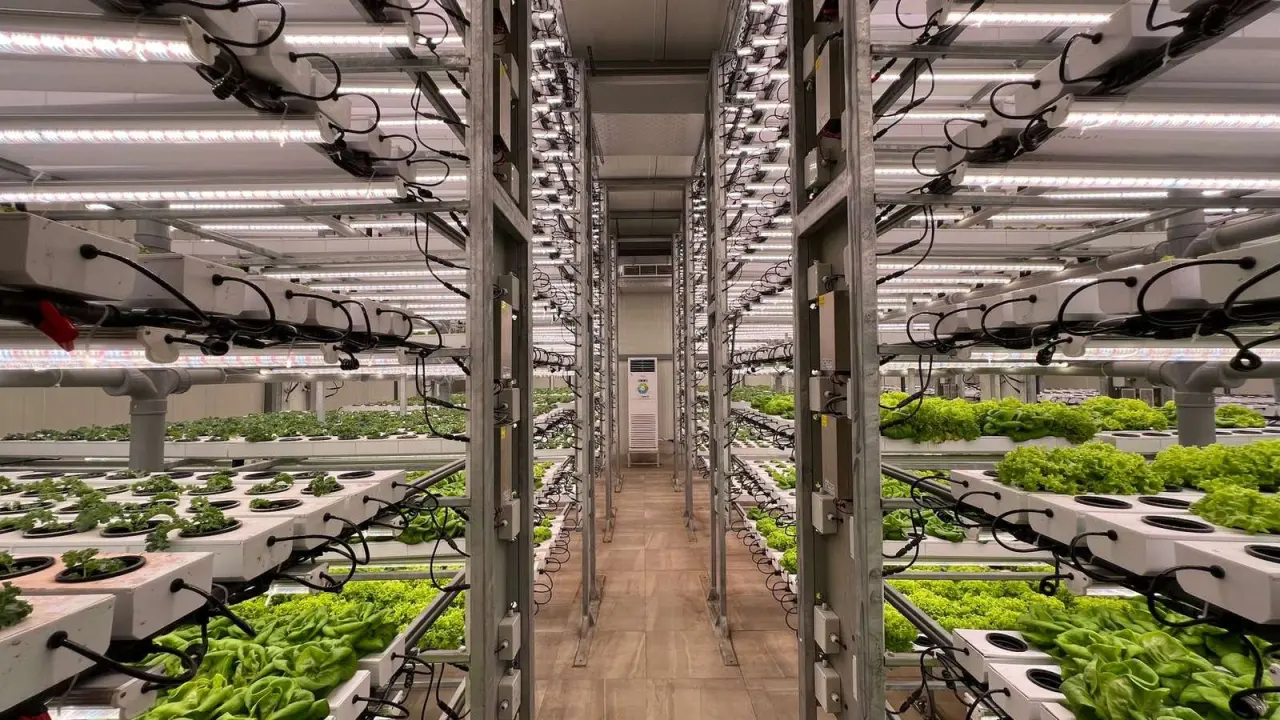
Vertical farming explained simply: you grow crops indoors on stacked layers under LED lights, using far less land and water. The catch, if you are weighing it up, is electricity, which is why leafy greens are the realistic crop.
This explainer sits inside the wider topic of agriculture in thailand, so it keeps coming back to what stacked indoor growing could mean for Bangkok and beyond.
| Item | Value |
|---|---|
| Energy per kilogram of lettuce | About 12.5 kWh (10 to 20 kWh depending on the farm) |
| Share of that energy used for lighting | Typically 60% to 80% |
| Water use versus field farming | Up to 95% less |
| Build cost per square foot of growing area | $100-300+ |
| Typical air temperature | 18-24°C |
| Common payback period without premium positioning | 5-10+ years |
The table draws on Hannah Ritchie’s Sustainability by Numbers analysis and Agritecture’s vertical farming guide. These figures shift with electricity prices and farm design, so check the sources before you rely on them.
How vertical farming works
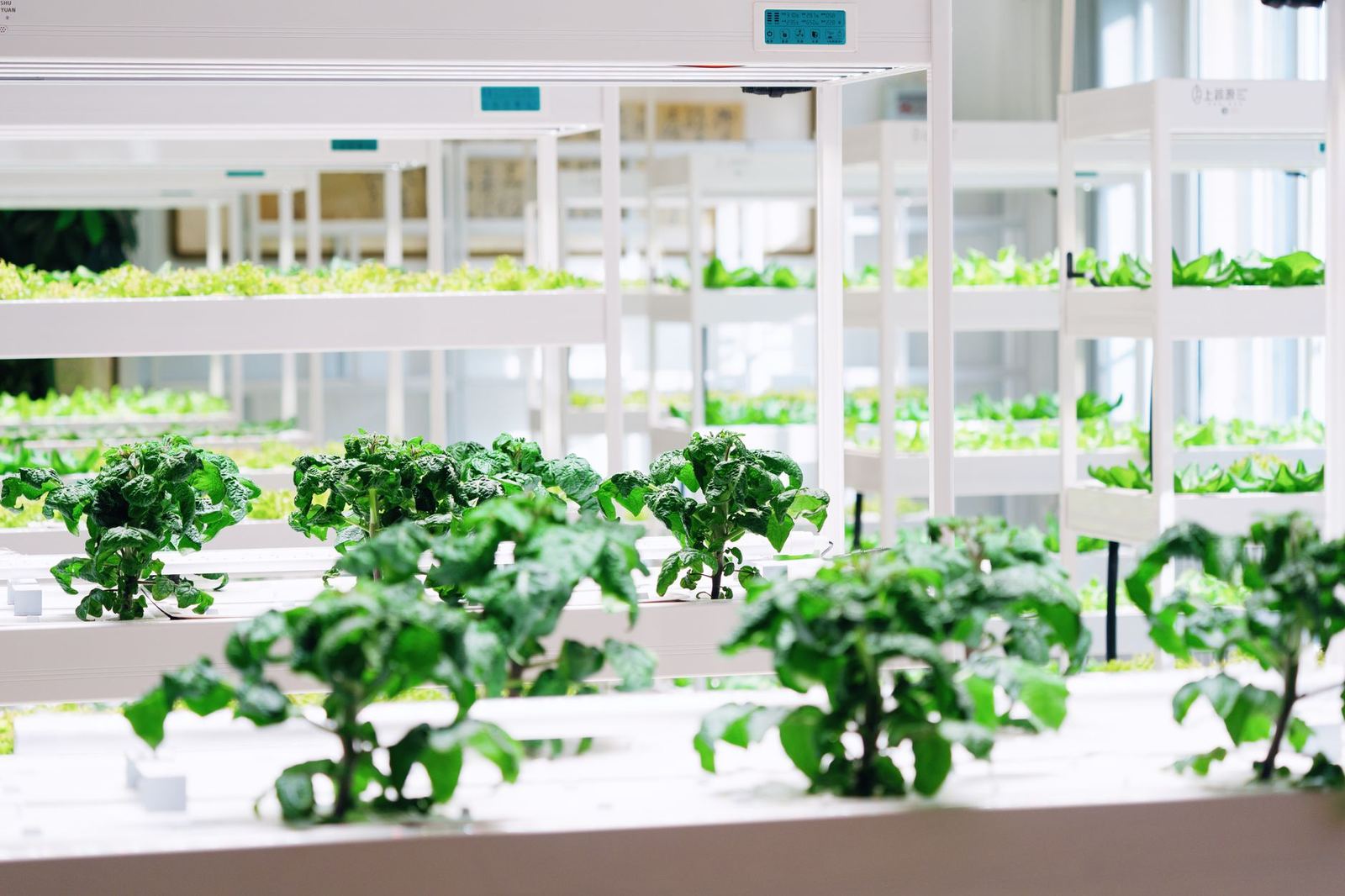
A vertical farm grows crops in stacked horizontal layers inside a climate-controlled building. It uses LED grow lights and hydroponic or aeroponic systems, so the crop does not depend on weather, soil or season, as the Agritecture industry guide defines it.
Each job that nature does in a field is replaced by something you control:
- Light: LED arrays stand in for the sun.
- Climate: air conditioning holds temperature at typically 18-24°C and relative humidity at 60-75%, according to Agritecture.
- Water and nutrients: roots sit in a nutrient solution, and water the plants do not absorb is filtered and recirculated.
- Data: sensors and software track conditions and schedule seeding and harvest.
The root-zone side is the part most newcomers meet first, and it is covered in hydroponics for beginners. Vertical farms rely on hydroponic or aeroponic growing systems rather than soil.
Vertical farms, greenhouses and open fields compared
The big appeal is output per square foot. The Agritecture guide puts yield at 10-100x a field equivalent for a vertical farm and 2-10x for a greenhouse.
Water follows the same pattern. Per Agritecture, a vertical farm uses up to 95% less water than a field, while a greenhouse uses 40-70% less.
The price of that control is capital. The same guide lists build cost per square foot at $100-$300+ for a vertical farm, $30-$80 for a greenhouse and $5-$20 for a traditional farm (Agritecture).
If you want the middle option explained, greenhouse farming basics covers how growing under sunlight differs from growing under LEDs.
Why electricity decides the economics
Hannah Ritchie sums up the problem in one line: energy demand is what stands in the way, because “we’re really swapping a land problem for an energy one” (Sustainability by Numbers).
Her estimate is around 12.5 kWh per kilogram of lettuce, with a range of roughly 10 to 20 kWh. Most of it, typically 60% to 80%, goes on lighting, according to Sustainability by Numbers. Agritecture’s estimate is a little lower, at 50-70% of electricity for lighting (Agritecture).
Now run the sums. At UK prices of around £0.25 per kWh, one kilogram of lettuce costs around £3.10 for the energy alone. That is close to the wholesale or retail price, which Ritchie finds at around £2.50 to £3.50 per kilogram (Sustainability by Numbers).
Prices swing the result. When UK electricity rose to more than £0.40 per kWh during 2023, energy alone for a kilogram of lettuce reached £5. In the US, industrial power can fall as low as $0.10 per kWh, which could mean as little as $1.25 of electricity per kilogram (Sustainability by Numbers).
Agritecture says energy typically makes up 25-40% of operating costs, and that several well-funded companies restructured or shut down between 2022 and 2024 (Agritecture). An IDTechEx analysis republished by Farms.com in November 2022 suggested ways to cope:
- Use more renewable energy, for example solar panels connected directly to the farm.
- Burn local waste wood in biomass boilers.
- Pulse the energy delivered to the lights instead of running them constantly.
- Move from low-margin crops to premium ones.
Which crops make sense in a vertical farm
Most newer companies focus on leafy greens. Ritchie notes that vegetables fetch higher prices than cereals, grow in shorter cycles, stay short in height and suit tightly controlled conditions (Sustainability by Numbers).
Microgreens and herbs can be even more favourable because they tend to fetch higher prices. Strawberries are another fit: small, fast-cycling, and sold on freshness (Sustainability by Numbers). The IDTechEx analysis cited Japan-based Oishii as a neutral example, saying its Omakase strawberries are noticeably sweeter than many conventionally farmed ones (Farms.com).
Agritecture adds that crop cycles are often 30-50% faster than in the field, which means more harvests per year from the same area (Agritecture).
Staples are a different story. A PNAS study cited by Ritchie reports experimental indoor wheat yields of 70 tonnes per hectare, with potential for 190, against a global average of 3.7 tonnes and a best outdoor yield of 17 (Sustainability by Numbers).
The cost still kills it. Using 2019 wheat prices, the authors put the cost-to-return ratio at around 50-to-1, and another paper in Nature estimated that lighting alone costs around 100 times the market price of wheat or rice (Sustainability by Numbers).
Is vertical farming good for the environment?
The honest answer is mixed. A Nature Food scoping review from Stockholm University and the University of Copenhagen, covered by FoodNavigator in November 2022, concluded that vertical farming has a mixed sustainability performance.
On the plus side, it outperforms field and greenhouse growing on land and water use. One study modelled that lettuce in the Netherlands could need 95% less water than current greenhouse production, thanks to recycling (FoodNavigator).
On the minus side, the reviewers found agreement that its greenhouse gas emissions are higher than open-field cultivation but lower than greenhouses. They also said the impact depends largely on the growing substrate, packaging material and the source of energy (FoodNavigator).
What vertical farming could mean for Bangkok and Thailand
Agritecture’s guide lists Indonesia, Thailand and Vietnam as emerging markets with strong government interest in the Southeast Asian region (Agritecture). Ritchie adds that large parts of Asia, including some countries with lower electricity prices, offer more competitive conditions than the UK (Sustainability by Numbers).
The supplied sources give no Thai electricity price, so treat that as a question to check, not a conclusion. Power cost is the number that matters most.
A Thammasat University paper in the 2015 volume of the BUILT journal looked at building-integrated farms in Bangkok. It surveyed 300 consumers aged 26-36, designed two mixed-use residential buildings with rooftop vegetable farms, and estimated payback within five years (BUILT journal).
Those were design studies, not operating farms. The same paper found that healthy-lifestyle consumers prefer eating fresh produce but do not like growing it themselves. It also cites a Thai Department of Health finding of 76-179 grams of fruit and vegetables a day for people aged 15 and over, against 400 g recommended by the World Health Organization (BUILT journal).
Frequently asked questions
Does vertical farming use soil?
Show answer
No. Instead of soil, roots are bathed in a nutrient solution, and the system recirculates water the plants do not absorb, according to the Agritecture guide.
Can vertical farms grow rice or wheat?
Show answer
Experiments show high yields, but the economics do not work. Lighting alone has been estimated at around 100 times the market price of wheat or rice, so Sustainability by Numbers sees cereals staying an outdoor crop.
Is vertical farming profitable?
Show answer
It can be, but it is harder than it looks. Agritecture says profitable operations tend to grow high-value, fast-cycling crops, have affordable electricity and sell near premium markets, and it notes paybacks of 5-10+ years are common without premium positioning (Agritecture).
How much water does it save?
Show answer
Agritecture cites up to 95% less than field farming. A modelled Dutch lettuce case showed 95% less than greenhouse production, according to FoodNavigator. Savings depend on the farm design.