Trying to make sense of what Thai farms produce? The main crops grown in Thailand by weight are sugarcane, cassava, rice and oil palm, while rice is the crop most farmers grow.
For the wider picture, see the overview of agriculture in thailand.
| Crop (2019 crop year) | Production |
|---|---|
| Sugarcane (for industry) | 128,530 thousand tons |
| Cassava (for industry) | 31,080 thousand tons |
| Rice (major and second rice) | 28,357 thousand tons (forecast) |
| Oil palm | 16,772 thousand tons (forecast) |
| Para rubber | 4,840 thousand tons (forecast) |
| Maize | 4,222 thousand tons (forecast) |
The figures come from the National Statistical Office’s Thailand Environment Statistics 2020, which credits the Office of Agricultural Economics. Figures can change and later crop years will differ, so check the source before you rely on them.
Which main crops lead by volume?
By weight, sugarcane is far ahead of everything else. The National Statistical Office table puts industrial sugarcane at 128,530 thousand tons in the 2019 crop year, against 31,080 thousand tons for industrial cassava and 28,357 thousand tons for rice.
Behind those three come oil palm at 16,772 thousand tons, para rubber at 4,840 thousand tons and maize at 4,222 thousand tons, according to the same table. The oil palm, rubber and maize values are marked as forecasts. Tonnage favours bulky crops, so rank by weight says little about how many farmers depend on a crop.
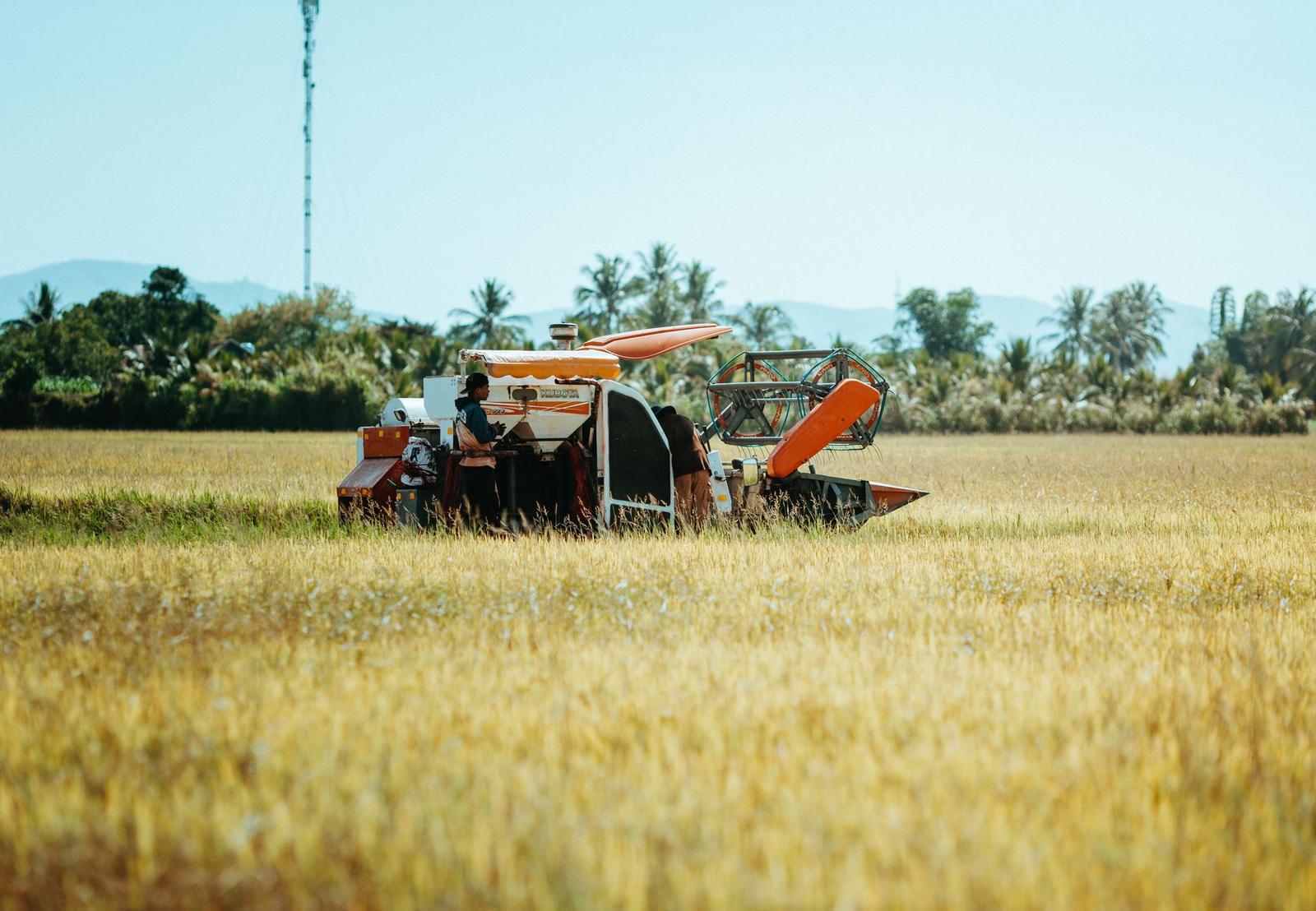
It helps to sort the crops into groups before looking at each one:
- Staple and feed crops: rice and maize.
- Industrial and plantation crops: sugarcane, cassava, oil palm and para rubber.
- Processing and specialty crops: pineapple, coffee and soybean.
- Vegetables, fruit trees and other perennials: reported outside the main tonnage table.
Rice: the crop most farmers grow
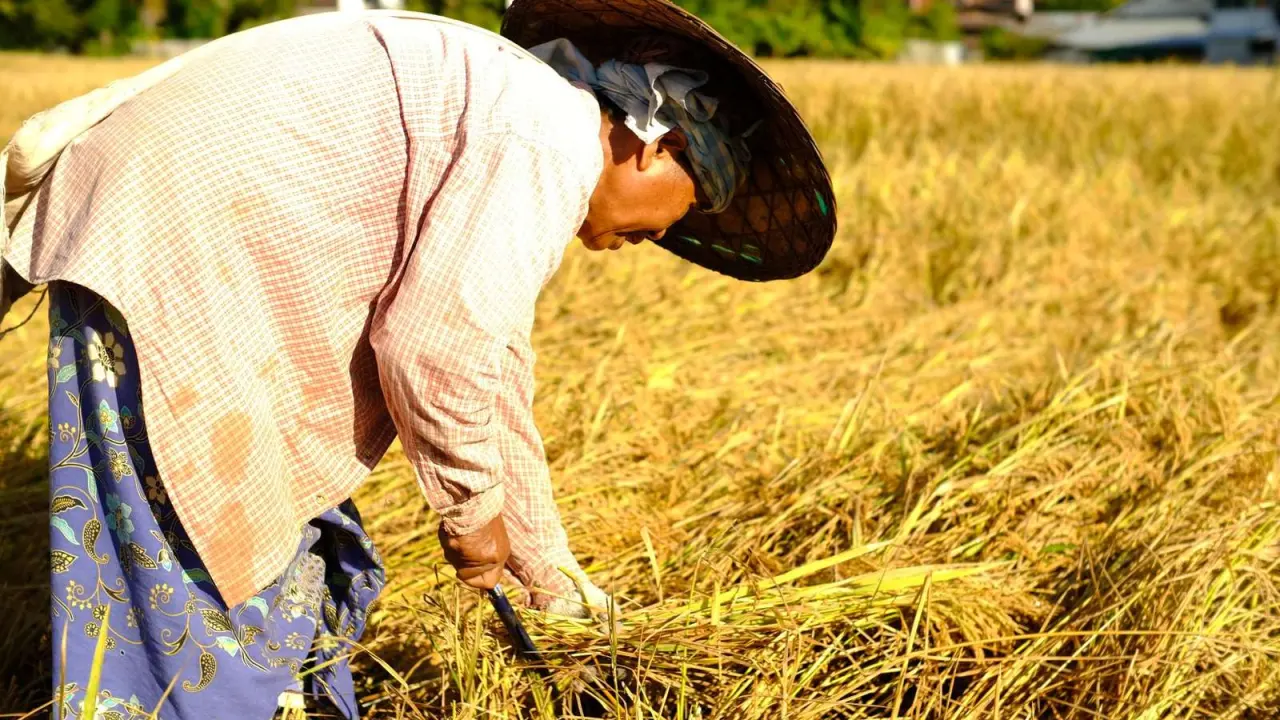
No other crop reaches as many farms. The Wikipedia article on agriculture in Thailand reports that some 60 percent of 13 million farmers grow rice, on almost half of the cultivated land. It also puts rice exports in 2014 at 1.3 percent of GDP.
Rice output moves with the season. The National Statistical Office table shows 27,420 thousand tons in 2015, 32,899 thousand tons in 2017 and a forecast of 28,357 thousand tons for 2019.
The 2019 yield is forecast at 467 kg per rai, per the same table. A rai is the Thai land unit, and the Wikipedia article equates 50 rai with eight hectares.
Cassava, sugarcane, oil palm and rubber
These four crops make up the industrial backbone of Thai farming. Sugarcane tonnage swings widely: the National Statistical Office table lists 92,989 thousand tons in 2017, 131,717 thousand tons in 2018 and 128,530 thousand tons in 2019, with a 2019 yield of 10,749 kg per rai.
Cassava is steadier, at 31,080 thousand tons in 2019 with a yield of 3,586 kg per rai, per the same table. The Wikipedia article uses the name tapioca for the same crop and lists it, rubber and sugar among commodities produced in significant amounts.
Oil palm shows the clearest growth in the table, rising from 12,163 thousand tons in 2015 to a forecast 16,772 thousand tons in 2019. Para rubber moved from 4,414 thousand tons to a forecast 4,840 thousand tons over the same span.
Maize, pineapple, soybean and coffee
Maize for animal feed reached 5,069 thousand tons in 2018, then dropped to a forecast 4,222 thousand tons in 2019, according to the National Statistical Office table. Industrial pineapple fell from 2,351 thousand tons in 2018 to a preliminary 1,680 thousand tons, with a preliminary yield of 3,601 kg per rai.
Soybean and coffee are small by tonnage: a forecast 40 thousand tons for soybean and 25 thousand tons for coffee in 2019, per the same table. The Wikipedia article adds that exports of processed foods such as canned tuna, pineapples and frozen shrimp are on the rise.
Fruit orchards sit mostly outside this tonnage table, so tropical fruit farming thailand is covered in its own guide.
When and where crops are grown
The FEWS NET Thailand Country Book (last updated October 2025) lists rice, maize and vegetables as major crops and describes a wet (major) and a dry (second) season. Its cropping year starts with the main rainy season (May-October), followed by a cool dry season (November-January) and then a hot, relatively dry season (February April).
Crop statistics are reported by province and by region. The same country book counts 76 provinces plus Bangkok, grouped into 4 geographic regions, which helps separate the different agro-climatic conditions of this long, narrow country.
Farm size matters too. The Wikipedia article says most Thai farmers own fewer than eight ha (50 rai) of land, that forty percent of the population work in agriculture-related jobs, and that agriculture accounts for an estimated 9-10.5 percent of GDP.
Readers who want to see how growers move away from conventional inputs can start with organic farming in thailand.
How to read Thai crop statistics
Thai publications often print two year systems side by side. The FEWS NET country book explains that Gregorian year + 543 equals the Buddhist year, so 2019 appears as 2562.
Three reporting periods also exist. Major crops follow a May-to-April cropping year, while cassava, sugarcane and coffee use an October-through-September commodity year, according to the same source.
Finally, watch the letters beside numbers. In the National Statistical Office table, p means preliminary data and f means forecast data, so those values may be revised.
Frequently asked questions
What is the most important crop in Thailand?
Show answer
Rice is described as the country’s most important crop, grown by some 60 percent of Thailand’s 13 million farmers, according to the Wikipedia article on agriculture in Thailand.
Which crop has the highest production by weight?
Show answer
Industrial sugarcane, at 128,530 thousand tons in the 2019 crop year, per the National Statistical Office table.
When is the main growing season?
Show answer
The main rainy season runs May-October and starts the cropping year, according to the FEWS NET Thailand Country Book.
Why do Thai statistics show years like 2562?
Show answer
Thailand uses a Buddhist calendar that begins its year-count 543 years before the Gregorian calendar, as the FEWS NET country book explains.